REAL Blog
How Far Can You Swim? Decoding the 5K, 10K, and 15K Marathon Distances
- Adina Oneill
The Pivot to the Open Water
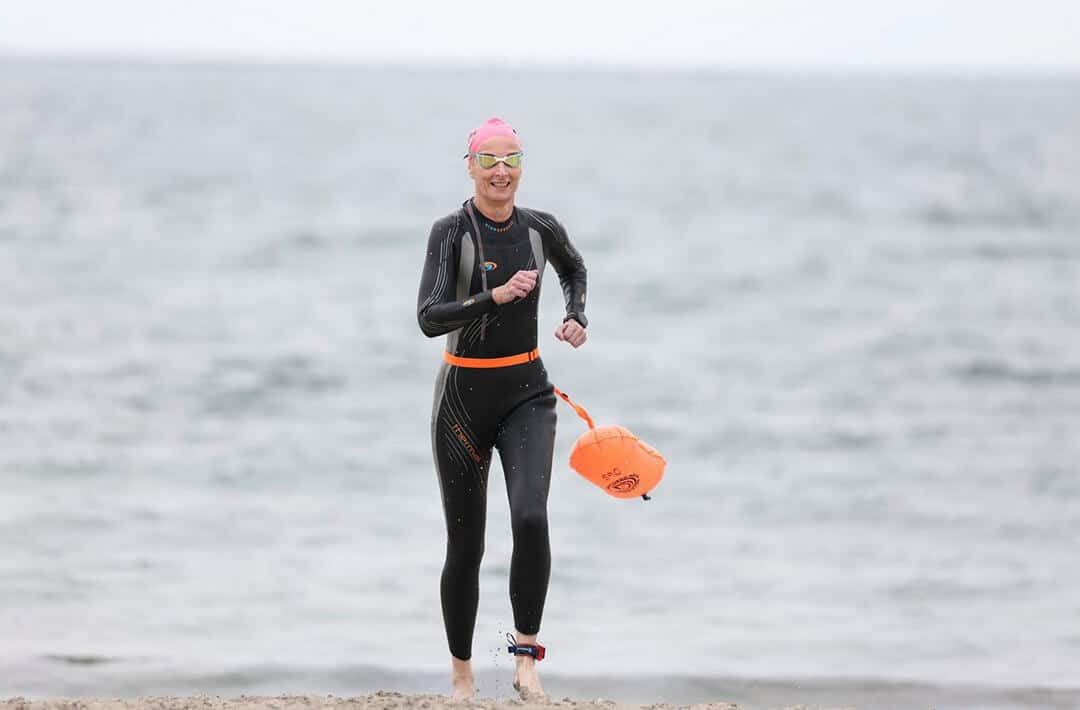
During the pandemic, the world went quiet and the pools closed. While my triathlon friends were content to stick to biking and running, I found myself drawn to a different kind of crowd: the open water swimmers of South Boston.
At my first meeting at Pleasure Bay, I watched a variety of swimmers – some in wetsuits, others in simple suits – discussing “loops.” I had swum the 1.2-mile distance across and back before, but the idea of circling the entire enclosed bay (about 1.5 miles) multiple times seemed like a different universe.
I had always dreamed of a 5K swim. That day, I swam two loops. My dream came true. For a moment, the stress of 2020 vanished. I didn’t care if the pools ever opened again. Then, I heard the whispers: “Who’s doing the 10K next month?” I didn’t even know that was a thing. You could just… keep swimming? No races, no pressure, just the water. I had found the kind of swimming my heart had been searching for my whole life.
From Student to Specialist
A 5K was a reach, but a 10K (6.2 miles) required a different level of respect. Even as an experienced triathlon coach, I realized that preparing for a marathon swim was a specific science. I sought out Kellie, an experienced marathon swimmer, who became my mentor.
She taught me the logistics, but what moved me was her pure joy. Every time we’d regroup during a long training set, she’d call out “More swimming!” with the biggest smile. I took that joy and combined it with my background in coaching to create a roadmap that worked.
In September 2020, I completed my first 10K. It was a “virtual” Swim to the Moon consisting of four loops around Pleasure Bay. I didn’t have a timing chip or an official finish line, just my first marathon distance swim and a promise to myself that one day, I’d make it to the “Unsalted and Shark Free” race in Michigan.
The Magic and the Grit
Since that day, I’ve logged many successful 10Ks and a 10-mile swim. But my proudest moment? A DNF (Did Not Finish).
Attempting a triple crossing at Lake Willoughby in Vermont, I battled a brutal headwind for the better part of 10 hours. I eventually ran out of time to finish the full 15 miles, but I walked away having swum 13 miles in the most punishing conditions I’ve ever faced.
It’s hard to describe how the open water makes me feel. It holds me up and soothes my soul. It is my meditation, the one place where I can slow down my brain and block out the noise. When I’m swimming, there is only the rhythm of the stroke and the feel of the water. Now, my mission is to help you find that same magic, without the guesswork.
The B*REAL Endurance Philosophy
If you are eyeing your first long swim (5K, 10K, or 15K), here are the non-negotiables I use when building plans for my athletes:
- Volume over Velocity: Long swims are the highlight, but your total weekly volume is what builds the “durability” your shoulders need.
- Systemic Scaling: We increase distance systematically. Pushing too far, too fast is a one-way ticket to an overuse injury.
- The “Secret” Strength: You don’t just swim with your arms; you swim with your entire body. Strength training isn’t optional for marathon swimmers.
- Conditioning for Chaos: The pool is predictable; lakes and oceans are not. We train for wind, waves, and the “what-ifs.”
- Fueling the Engine: We don’t call it eating; we call it “feeding.” Learning what your stomach tolerates every 30 minutes is just as important as your stroke technique.
How Long Will It Take?
Use this chart to see where you sit. Whether you need a 16-week specific build or a 24-week foundation, there is a path for you:
| Goal Distance | Fitness Needed for 16-Week Plan | Add 8-Week Base Build If... |
|---|---|---|
| Half Moon (5K) | Weekly Total: 3.5K / Long Swim: 1.5K | Weekly Total: 2K / Long Swim: 1K |
| Full Moon (10K) | Weekly Total: 7K / Long Swim: 3K | Weekly Total: 4K / Long Swim: 2K |
| Super Moon (15K) | Weekly Total: 9.5K / Long Swim: 3.5K | Weekly Total: 7K / Long Swim: 3K |
The Science is the Foundation, But the “Pod” is the Fuel
You can have the perfect plan on paper, but the open water doesn’t care about paper. It cares about resilience.
When I finally made it to the Swim to the Moon Festival in 2024, I experienced this firsthand on Day 2. The fatigue from the previous day’s 10K hit me hard, but as I approached the final turnaround for the Super Moon (15K), I found my rhythm alongside a woman named Suzanne.
We hadn’t known each other the day before, but in those middle miles, we became a “pod” of two – both of us digging deep, fueled by the silent pact not to let the other down. We didn’t make the 6-hour cutoff. In the world of timing chips, it was a DNF. But in the world of the human spirit? It was an absolute triumph.
We shared a huge hug in the water – two strangers who had become a team in the face of fatigue. I was elated. I had spent the weekend telling fellow swimmers that “everyone out here is ahead of anyone who didn’t even try,” and there I was, living that victory with Suzanne.
I knew Swim to the Moon was in perfect alignment with the B*REAL spirit when the staff met us with 10K finisher medals and towels. They didn’t see a “did not finish”; they saw the 10 kilometers of heart we had just put into the lake. That connection – the community that believes every BODY belongs in the water – is exactly why I created the Team B*REAL Training Pods.
Join the 2026 Mission Control
While swimming is technically an individual sport, we never truly get to the finish line alone. I am so proud to announce that Team B*REAL is the official coaching partner for the 2026 Swim to the Moon Festival. I’ve taken everything I learned from Kellie, my 13-mile DNF, and years of coaching to create the Training Pods. You don’t have to guess if you’re doing enough yards or wonder how to handle the current. I’ve built the roadmap; you just have to bring the “more swimming” spirit.
Whether you are aiming for your first Half Moon (5K) or looking to conquer the Super Moon (15K), you belong in our water.
To help you reach that finish line with confidence, our 24-week Base Build Pods start on February 23rd. We’ll gather as a community for our Welcome Webinar on February 17th to prep for the season ahead. No matter which race you’ve circled on your 2026 calendar, we have a lane waiting for you.
P.S. Missed our live session? You can catch the full recording of the “How Far Can You Swim?” webinar RIGHT HERE to learn more about decoding your distance and preparing for your own moonshot.
Remember: Forward is a Pace. Let’s find yours together.
Looking for more details about Swim to the Moon and my 2024 experience? [Read the full race report]
Related Posts
Why ‘Not Being Political’ Kills Inclusion: Lessons from Women’s Hockey 2026
In the photo for this post, I’m wearing one of my favorite shirts. It says, “as strong as the woman next to me.” As we move through Women’s History Month, those words feel heavier than usual.
Stop Guessing, Start Gliding: Why More ‘Yards’ Won’t Fix Your Swim (And What Will)
You’ve signed up for the race. You’ve got the bike, you’ve hit the pavement for your runs, and you’ve told your friends. But there’s a shadow hanging over your training calendar: The Swim.
If you’re a woman in her 40s or 50s staring down your first triathlon or open water event, you’re likely feeling a mix of excitement and legitimate nerves.